Often I sit and dream of places I’d like to visit — France, Hawaii, Germany, Russia, Australia. In my 35 years, I’ve never fantasized about travelling to Poland, especially for medical care.
But a year ago, there was a CTV news story about Dr. Paolo Zamboni of Italy and his hypothesis that physiological malformations of veins may trigger multiple sclerosis (MS).
I watched with great interest and excitement, yet tried hard to remain skeptical and cautious. I began to research Zamboni’s theory, reading his scientific studies, reviewing the testimonials of people who had the procedure performed and, of course, the opinions of critics.
I became optimistic that he may have found a significant causal link between MS and malformed veins. But I was still not convinced.
Last spring, Maureen Ayles of Labrador City announced she had received the liberation treatment in Tychy, Poland, from Dr. Jacek Kostecki. She reported positive results.
Since then, many others from this province have received treatment in places like Poland, Bulgaria, Germany, the U.S., Mexico and Costa Rica. As people returned to Newfoundland and Labrador, they shared their experiences. People such as the fun-loving Tina O’Brien from the Southern Shore, Michael Duffy, a lawyer from Torbay, and autobody expert Perry Goodyear of Grand Bank. They had been liberated in Poland, Bulgaria and the U.S., respectively.
As part of an effort to lobby the provincial and federal governments to further the advancement of this potential new treatment for MS, we collected nearly 300 testimonials from Canadians who’d had the liberation treatment. Some of the stories were nothing short of miraculous; others, not so much. All were positive.
I received the treatment in Poland on Oct. 14.
Round-about route
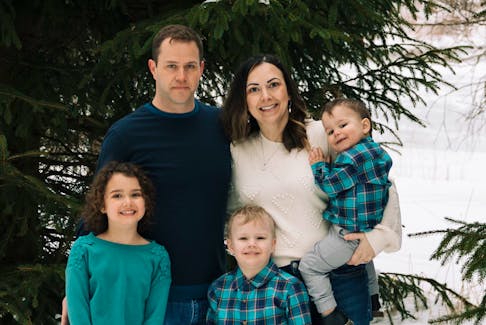
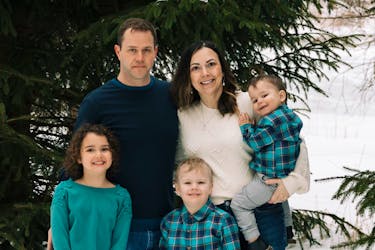
On Oct. 8, my younger brother David and I embarked on a trip to Tychy that neither of us will ever forget. My brother, an RCMP officer in Nova Scotia, accompanied me because my wife Rhonda and I decided it was best for her remain at home to care for Sam, our one-year-old son, and our expected child, Anna.
I met my brother in Toronto and we caught a 9.5-hour flight to Frankfurt, Germany. Having been delayed departing Canada, we had only minutes to catch our connecting flight to Krakow. For those of you who have not travelled to Europe, Frankfurt is the mother of all airports. After catching several buses, getting our passports stamped at Customs and running for what seemed like miles, we caught our flight to Poland by seconds.
Landing in Krakow, we were met by our driver, Derrick, who would take us approximately 70 kilometres to Tychy. A tall, well-dressed Polish man in his mid-30s, Derrick was an experienced driver who felt quite comfortable driving at 215 km/h and weaving in and out of heavy traffic.
Although my brother and I could not speak any Polish and Derrick knew little English, we managed to enjoy each other’s company. He pointed out castles and other prominent landmarks and we asked him questions about where we were going and what to expect.
Shortly before we arrived in Tychy, Derrick’s cellphone rang. It was Katrazyna Franek, or “Kate,” as we called her. She’s a hard-working, organized person who used to work with Europa Nostra, a Polish tourism company that helps visitors with their itineraries. Now, she works 20 hours a day helping people from other countries receive medical treatment in Poland.
She began by apologizing and then informed me I had to go directly to a clinic in another community, whose name I never did quite catch. As we approached the hospital, I admired its old architecture and narrow winding roads leading to the diagnostic imaging centre. The inside was clean and modern with the latest technology.
While waiting for my MRI, I met other Canadians. A 61-year-old man from Calgary, once a farmer and avid golfer who now uses a wheelchair. A young woman and mother of two, also from Calgary, who is numb from her waist down. And a fellow Newfoundlander who now lives in Nova Scotia and who had been without an official diagnosis of MS in the Canadian medical system. All of us were seeking a new lease on life through the liberation treatment.
Following my MRI, we headed back to the hotel in Tychy, where I had the opportunity to meet more Canadians seeking treatment. There were 10 from Calgary, two from Ontario and four from this province. Most had someone accompanying them — a friend, sibling, adult child, spouse, and even one person’s paratransit bus operator.
For the next couple of days we shared our experiences, expectations and dreams. On days we had no medical appointments, we toured Poland. Two of the most memorable destinations for me were the beautiful city of Krakow and the unbelievably horrific Auschwitz-Birkenau, where German Nazis killed more than 1.1 million men, women and children.
More clinic time
At a hospital in Tychy on Oct. 11, I had a consultation with a neurologist.
On Oct. 12, we went to another medical facility where I met the world-renowned Kostecki, a Polish cardiological surgeon. A humble and extremely hard-working person, he is dedicated to advancing medical science, in particular for those with MS. He is currently leading a clinical trial study to determine if treating people for chronic cerebral spinal insufficiency (CCSVI) and restoring normal blood flow in malformed veins relieves symptoms of MS.
During my initial meeting with Kostecki, he performed a Doppler ultrasound and discovered that the blood flow in my right jugular was about half of what it should be — most likely because of an issue with the valve in that vein. His findings were identical to what had been determined at the private health clinic I visited in Vancouver in May. We discussed the possibility of inserting a stent into my vein to prevent re-stenosis, but on Kostecki’s advice, I agreed not to because of the lack of research and possible long-term effects.
"The first thing I noticed on the operating table was a lable on the venography machine..." - Mark Lane
As the days passed, more of the Canadians I had met were receiving treatment and returning to the hotel to share their experiences. Results ranged from warm hands and feet to not having to use a cane and, most dramatically for me, a man who had not been able to stand for six years could now stand unassisted.
The night before my treatment was difficult. I tossed and turned and felt a range of emotions — fatigue, excitement, nervousness and homesickness. I assured myself that everything would be positive and I was in the care of the competent Kostecki.
The day, when it finally arrived, was a day of fasting. We would travel two hours to Raciborz, a town within 15 km of the Czech Republic border, to receive treatment by Kostecki and Dr. Waclaw Kuczmik, a well-known and respected interventional radiologist.
After a scenic two-hour drive through the countryside, we arrived at a hospital that had only opened the month before. The hospital was cleaner and more technologically advanced than any medical facility I have ever visited in Canada.
We reported to the cardiological unit and were shown to the recovery area and introduced to the nurses. Although they didn’t speak English, I could sense their genuine concern and compassion.
Having previously shown my military ID to Kate, she introduced me to everyone as “Captain.” The name stuck and everyone, including Kostecki, referred to me as Captain. To be honest, I was treated like royalty. I wasn’t sure if it was because it is prestigious to be a member of the army in Poland or perhaps because the rank of captain in the Polish military is higher than it is in the Canadian military. The likely answer is simpler: that Poland has a caring and sympathetic culture that truly has compassion for all mankind.
I got undressed and was told I’d be the first of the four Newfoundlanders to receive the treatment. In accordance with Polish custom, as a man I offered to be last, but the doctor replied that since I was the only one now not wearing clothes, it was time to go to ensure I did not get cold.
Into the operating room
This was it. Here I was, in a hospital more than 8,000 kilometres from my friends and family in Holyrood, about to undergo surgery that could change the rest of my life. As I was wheeled to the operating room, there were many people talking but I didn’t understand a word. Thoughts were running wild in my head. It was surreal.
Then the double doors opened and there stood Kostecki and Kuczmik.
Both doctors speak English well and and were reassuring.
The first thing I noticed on the operating table was a label on the venography machine — Made in Germany, May 2010. This was also reassuring, as my wife and I both drive Volkswagens.
An IV was inserted into my left arm and I was given a local anesthetic in my groin. Then Kosetecki inserted a catheter into my femoral vein. On the monitors to my left, I could see my ribs and lungs. Using the catheter, they entered the azygos vein and found it to be in perfect condition. From there, they moved to my left jugular and performed the first series of angioplasty.
Live TV
I have seen many strange things in my life, but nothing compares to being able to watch your teeth clench on a large black and white screen while seeing a balloon being blown up in your neck (see illustration, page B1).
As the balloon became inflated, the pressure intensified. It hurt — momentarily, yes, but angioplasty is not pleasant.
In my lobby efforts to have MS research advanced, I often referred to angio as being less invasive than a tattoo. I will not use this analogy in the future.
After completing the angioplasty of the left side, they moved on to the right side where the stenosis was more severe. Kostecki estimated that the narrowing near my valve was approximately 70 per cent of what it should be. He performed balloon angioplasty in several places throughout my vein and each time my head felt like it was going to pop.
Forty-seven minutes from the time I entered the operating room, I was brought to the recovery area, where three the women waiting for treatment asked me about the experience. I decided to downplay the pain, for morale’s sake. If, prior to battle, an officer informed his men they’d all die, the fighting spirit would surely diminish. This situation was not that different.
Within four hours, the four of us had been “liberated.” Throughout the night, we chatted, laughed and compared our experiences.
For me it was definitely worth it. Although I was in relatively good physical condition, I pursued the treatment as a preventive measure. If this procedure proves to be effective in halting the progression of MS, it could mean the difference in playing with my children and watching them play.
Time will tell
Only time will tell if the treatment worked. If, 25 years down the road I am a healthy 60-year-old man preparing to enjoy his retirement and travelling the world with my family, then yes, it worked.
In the short term, I can tell you this: I feel better — more alert, more alive, and most of my symptoms have disappeared.
Is there a risk with angioplasty? Yes, but I’d rather take the risk and live with the long-term effects then risk living with the potentially long-term effects of MS.
My goal now is to get into the best physical condition of my life in 2011.
If the treatment halts the progression of MS, I’ve been given a special gift by Kostecki and the beautiful people of Poland.


Mark, I am so glad you wrote this informative article. It gives me an idea of what I can expect when I go to Poland next month. You are an inspiration to those of us who will follow your lead.