Province in excellent shape: minister


Published on August 9, 2011
Topics :
Standard Poors , Newfoundland and Labrador , Greece , United States

I feel it is important to respond to a recent letter to the editor by Craig Westcott, the director of communications for the Official Opposition, regarding the Muskrat Falls hydroelectric project and how it relates to the fiscal situation in Newfoundland and Labrador.

The doom and gloom prognosis put forward by Mr. Westcott is not surprising, since we have been hearing the same negative comments about the economic future of the province from the Liberal party for months now.

Before discussing the project, I think it is important to highlight the considerable improvement this province has experienced since 2003 when the Liberals controlled the public purse and just how far we have come in eight short years.

When this government came into power, Newfoundland and Labrador’s finances were in a very precarious position. Annual deficits were approaching $1 billion and an independent review at the time noted that if significant changes were not made, the provincial debt was projected to reach almost

$16 billion within four years.

The review also noted that infrastructure maintenance had been deferred to the point where hundreds of millions of dollars was needed to bring our schools, hospitals and roads up to acceptable standards.

Our government was forced to make some very tough and unpopular decisions at that time in order to get our fiscal house back in shape.

Our first few years of office saw cuts to the public service and public sector wage freezes, decreases in program spending and a deferral of all non-essential capital expenditures.

To turn things around, we developed a plan and stuck to it. In that short span of eight years, the turnaround that has taken place in Newfoundland and Labrador is remarkable.

Instead of increasing, our debt has actually decreased by almost $4 billion. Of course, that means our debt servicing costs have also dropped, which leaves us with more money to invest in the people and communities of the province.

We have not borrowed in the capital markets for operational purposes since 2004 and only borrowed in 2007 to reduce the unfunded liability in the province’s pension plans.

Our bonds are trading in secondary markets at rates that are at historic levels compared to the federal government and other provinces, a clear indication of how positive capital markets view our prospects.

We are amongst the leaders of all provinces in terms of business investment. We have gone from a “have-not” to a “have” province and more people are working right now in Newfoundland Labrador than at any other point in our history.

This year’s budget will see Newfoundland and Labrador run its sixth surplus out of the past seven years and accordingly there has never been a better time to invest in a project such as Muskrat Falls.

Once developed, these assets will provide a stable, predictable revenue stream which will cover all debt servicing costs.

Mr. Westcott’s comparison of Newfoundland and Labrador to Greece is ridiculous and nothing short of fear mongering.

Greece, which has a debt to GDP ratio of 160 per cent, came to a situation where its economy could not generate sufficient revenue to support its expenses and debt.

Our debt to GDP ratio, one of the primary indicators of the financial health of a province, is among the best in the country and has improved from an unsustainable level of 70 per cent in 1999 to its current level of 26.7 per cent. Compare that also with the U.S., which recently saw its debt to GDP ratio reach approximately 100 per cent.

It is also worth noting that the credit rating agency Standard & Poors, while upgrading our credit rating from ‘A’ to ‘A+’ in 2010 (the highest it has ever been), noted that Newfoundland and Labrador “has a strong liquidity position, reflecting its past operating surpluses and prudent spending practices.”

Using current revenues from non-renewable resources for renewable energy projects for the future benefit of Newfoundland and Labrador is the core of this province’s Energy Plan.

I firmly believe that Muskrat Falls and, ultimately, the development of the entire Lower Churchill will be major pillars of the provincial economy for decades to come.

Investing money today in projects that will provide affordable, stable, environmentally friendly energy to markets at home and in Canada and the United States will ensure a steady income to this province for generations of Newfoundlanders and Labradorians.


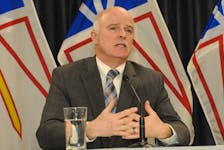
Tom Marshall is minister of finance and president of treasury board for Newfoundland and Labrador.

Comments

  • Username
    Maurice E. Adams
    - August 10, 2011 at 17:40:47

    Mr. Marshal says "...a project such as Muskrat Falls. Once developed, these assets will provide a stable, predictable revenue stream which will cover all debt servicing costs" -----The revenue stream that he speaks of will come from NL ratepayers, many of whom cannot afford to pay for this multi-billion dollar, unnecessary project, and much of the money being paid out by NL ratepayers will go to pay the interest on the debt. It is misleading to suggest that this project is paying for itself ---- it will be paid for by NL ratepayers ---- PERIOD.

    Submit a Comment

  • Username
    Is Muskrat Falls Energy destined for Vermont Utilities through Emera and Hydro Quebec
    - August 10, 2011 at 14:35:22

    Sue's Blog today contains an article titled "Power Lines Crossed with Dunderdale Government and she asks the question "What does this mean"? The article is pasted below: I am now wondering if this is the energy that will be produced by Muskrat Falls? If so is it destined to be sold to to Emera for resale to Vermont Utilities? I would like the above question answered by Nalcor. The article on Sue's Blog states: "The Vermont Public Service Board recently approved a contract for Vermont utilities to buy power from Hydro-Québec for 20 years. The new contract will supply about 20% of Vermont’s power needs, bringing 225 MW of power into Vermont to replace an expiring contract for 310 MW. The starting price for the power is about $58.07 per MWh and will be adjusted annually based on regional electricity prices. Vermont regulators found the agreement provides Vermont financial benefits by locking in a stable price that is lower than many other sources of electricity. Contracts such as this represent only the tip of the iceberg for power imports from Québec, as Hydro-Québec partners to build transmission lines through New York and New Hampshire.

    Submit a Comment

  • Username
    When are our politicians and bureaucrats going to learn
    - August 10, 2011 at 10:51:01

    Why weren't there monies allotted to improve the road infrastructure in the areas promoted by the beautiful Tourisms Ads that have been advertised nationally for the past number of years? Are those dollars being wasted on the Muskrat Falls Project? The ads did their job, but when the tourists get here they become disillusioned by the infrastructure. There is no better way to destroy one's tourism industry than having the tourists who visit having bad experiences with road conditions and going back home to report on their bad experiences. When are we ever going to learn? If our government leaders don't learn now and act on what they have learned, they will destroy the chances of ever building a vibrant tourism industry in our province, the industry that should have existed here for many years. It is so unfortunate that we have had so many inept politicians and bureaucrats governing our province. They were more intune with running the province to suit their own needs and not those of the ordinary Newfoundlander and Labradorian.

    Submit a Comment

  • Username
    Maurice E. Adams
    - August 10, 2011 at 09:39:41

    U. S. researchers are saying that the Northwest Passage could be ice free in less than 20 year (by 2030) due to global warming. Also, Nalcor's own numbers show that Newfoundland energy demand peaked in 2004 (almost 8 years ago) and has not seen a single year over year increase since then (down every year) from a high of 8700 GWh in 2004 to less than 7400 in 2010 (Nalcor itself in the 2010 Annual Report attributes last year's reduction in demand to warmer temperatures). Now what does that do to Nalcor's high cost estimates and demand on Holyrood? If there will be no ice in the Arctic, how will Nalcor pay off Muskrat with revenues from NL ratepayers when we have little of no winters?

    Submit a Comment

  • Username
    Boyd
    - August 10, 2011 at 09:31:12

    What you expect the Minister to say, he was responsible for the financing in the Province since 2003, that he did a bad job? But be Honest Minister give credit to the deals that saw your Government reap in the benefits from signed deals by other Governments, any parent can be a good parent when there is no limit to the resource (Money). That's why there are no residents running to the polls during elections because Government Officials are not honest and up front, continually patting themselves on the back. Again while the Minister tells of the revenues from Muskrat while the Premier tells the public there are no revenues the project is developed solely for the purpose on energy requirements pass 2017, can you guys please get together and give the same message.

    Submit a Comment

  • Username
    All provincial accounting systems should be transparent
    - August 10, 2011 at 09:25:05

    Why isn't the accounting of our province as clear as looking through glass? Shouldn't all of the accounting steps be put forth so that the ordinary person can, if they so desire, monitor where our tax and resource monies are spent? Shouldn't we know all the details of what is transpiring with our natural resource base? I just read recently on this site that already $350 Million dollars have been spent on the Muskrat Falls Project and not one piece of infrastructure has come to light. We don't know who is pushing the Muskrat Falls Project under such precarious economic times, when we are told that we will be producing four times more energy than we can consume in our province and that there are no customers in sight to buy the energy once the project is finished. We are told that the Newfoundland and Labrador consumer will be on the hook to make mortgage payments on this project once it is competed even if economics stay the same. Those pushing this project are not accountable, all it seems like to me is that certain people who probably stand to make Millions of the development of this project are pushing it ahead without any thought process going into who is going to be saddled with the onerous debt of paying this project off, they are suffering from the me-syndrome. We need more information as to what irons are in the pipeline to combat our fears of all the risks that are presently raising their ugly heads in one of the worse recessions eras we have seen since the Depression years of the 1930s.

    Submit a Comment

  • Username
    Dereck
    - August 9, 2011 at 15:36:45

    Spin prior to election.

    Submit a Comment

  • Username
    W McLean
    - August 9, 2011 at 14:23:35

    And the last few years, Minister Marshall, have seen growth in the public service and public sector, to the point where one in four working people in the province is either a provincial civil servant, a teacher or other school board employee, a health board employee, a crown corporation employee, or an employee of a provincial public post-secondary institution.

    Submit a Comment

    • Username
      Don't forget
      - August 10, 2011 at 09:29:01

      Don't forget the non-working people who are also living off the public purse such as the pensioners, welfare recipients, EI and non-profit organizations that rely on government grants. We should also include all the private businesses that do a lot of business with government but that is a list too long for here. Pretty well covers us all.

  • Username
    Maurice E. Adams
    - August 9, 2011 at 13:29:55

    Tom Marshall says ---- "Using current revenues from non-renewable resources for renewable energy projects for the future benefit of Newfoundland and Labrador is the core of this province’s Energy Plan". Nice words, nice idea, if they were credible. They are not. ------ One, current oil production is decreasing and we do not know that oil revenues will be there to finance Muskrat Falls. Two, Muskrat Falls will be financed mostly on the backs of Newfoundland consumers/ ratepayers --- who are ill-equipped to pay the excessive rate increases needed to finance this hair-brained scheme. It is therefore less than intellectually honest Mr. Marshall to suggest to your fellow Newfoundlanders that Muskrat Falls will be financed by oil revenues ---- when you know the difference.

    Submit a Comment

    • Username
      gal
      - August 10, 2011 at 09:28:52

      Four postings on one topic sounds like someone is obsessed with this topic or a party.

  • Username
    Addy
    - August 9, 2011 at 13:29:22

    Investing a short term revenue stream into a long term stream is a good idea but I don't know if this project is the right idea. Without reliable information the public is worried. Plenty of people have tossed out statistics to the point that it's beginning to sound like 'lies, damn lies and statistics' - from both sides.

    Submit a Comment

  • Username
    Gerry
    - August 9, 2011 at 13:27:32

    Sounds reasonable.

    Submit a Comment

  • Username
    Doug Smith
    - August 9, 2011 at 12:28:29

    Mr. Marshall forgets that the only reason we are a have province is , OIL. If we didn't have the oil money we would still be a have not province. Still thousands of people leave this province daily to work in other Canadian provinces. Two of my wife's and my three daughters now live and work in other provinces. The little bit of prosperity we do have here will be gone when the oil goes and we are saddled with a huge debt thanks to Muskrat Falls.

    Submit a Comment

  • Username
    Maurice E. Adams
    - August 9, 2011 at 12:25:53

    Muskrat Falls is predicated to a large extent on Nalcor's forecast model for Holyrood oil costs. Nalcor's forecast for cheap No.6 oil for 10 years from now is more than 32% higher than one of the major oil company's in Alberta is forecasting. From today's Globe and Mail, the Alberta company which is looking at producing 400,000 bbls per day is forecasting an average price of only $92 for top quality west Texas intermediate oil over the next 10 years --- while Nalcor uses a price of more than $122 per bbl for No. 6 crude. And we should put the province's economic viability at risk based on this kind of forecasting?

    Submit a Comment

  • Username
    Cyril Rogers
    - August 9, 2011 at 12:00:12

    With all due respect to Minister Marshall, any credible person could have spent the money this government has had to work with. They simply got lucky! For the first few years of their tenure, Voisey's Bay was creating more revenue than the oil and that was the Liberal deal you could "drive a Mack truck through". Wihout the sudden influx of oil and mining revenues, Danny would have had much less to work with and he did not create those revenue streams. This current government has no strategic plan in place for the future and when they get criticized by someone like Dr. Wade Locke for lack of planning you have to seriously look at their approach.

    Submit a Comment

  • Username
    Are we in for another clash with Quebec
    - August 9, 2011 at 11:59:52

    I just read on a Sue's Blog this morning that North of Vermont’s border, Hydro-Quebec is developing or planning for over 10,000 MW of new generation, as well as connections to high-voltage transmission lines through New Hampshire and New York. Sue says any connection between Vermont and Newfoundland would likely go through Hydro-Quebec lines, and the two provinces have a long history of clashing on energy relations. Yes, I want to repeat the question Sue posed and ask are we in for another clash with Quebec and does this pose another risk for the $6 Billion dollar Muskrat Falls Project, that could keep the Newfoundland and Labrador power consumers in limbo with having to pay the whole shot for the energy produced because we might be prevented in getting it to potential marketsb in the US. because of Hydro-Quebec's ownerhip of the transmission lines? I would like an answer from Nalcor on this subject.

    Submit a Comment

  • Username
    Maurice E. Adams
    - August 9, 2011 at 09:56:15

    In 1999 we had virtually no revenue from oil. If at that time a debt ratio of 70% was and is (by the Minister's own words) -- unsustainable, and we add another 4 or perhaps 8 billion to our exisiting debt due to Muskrat Falls, plus, even without Muskrat Falls, Dr. Locke says we will be running another $1 billion PER YEAR in deficits within 10 years (due to our current spending levels and declining revenues from oil), where will our debt to GDP ratio be in 10 years time ---- just when we consumers will start a 35 year plus pay off period for Muskrat Falls? How many billions will we be paying out for debt service charges for Muskrat and for our existing multi-billion dollar debt and the added multi-billion dollar debt we will be adding through our projected $1 billion yearly deficits? Why not just pay off our debt (between now and 2035) and thereby FOR CERTAIN, strengthen our position so that we can run our own 5400 MW line to Newfoundland by 2041. That will not put our children, grand children and their grand children in debt, nor put the very viability of the province at risk, and we will then have the capacity to get billions in revenue for the Upper Churchill, then do Gull, and then do Muskrat ----- WHEN WE WILL BE ABLE TO AFFORD IT, WHEN WE ARE READ, ON OUR TERMS AND WITHOUT MASSIVE DEBT.

    Submit a Comment

  • Username
    Maurice E. Adams
    - August 9, 2011 at 09:55:41

    Dr. Locke says that even without Muskrat Falls, with declining oil output, revenues will be falling so that in 10 years time we will be running billion dollar YEARLY deficits. Now add the cost (BILLIONS) for Muskrat Falls to our existing debt and the additional BILLIONS in additional debt servicing charges due to our current debt and expected additional deficits ----this province's debt to GDP ratio will be going through the roof in the coming years ---- largely for a Muskrat Falls project that we don't need (have no demand for), is not best value, and will do nothing to strengthen our fiscal position or our bargaining position with Quebec in 2041.

    Submit a Comment

  • Username
    The Economist
    - August 9, 2011 at 08:47:59

    In the book This Time is Different by Reinhart and Rogoof the history of Newfoundland is reported in Box 5.2( Chapter 5). It is noted that Newfoundland is the only country in the world to give up it's democracy because it could not pay it's debts. I guess Tom is looking to make a bigger splash in the history books.

    Submit a Comment

Submit a Comment

Submit a Comment

This form is NOT used for emailing the article to a friend. Please use the "Send to a friend" link at the top of the page for that purpose.

The Telegram is not responsible for posted comments. Please be polite and confine your comments to the subject of the posted story. If you have an account, please sign on to it..

(we keep all emails private)
Agreement

We ask that users remain courteous. You may not post insulting, discriminatory or inappropriate content, which may be removed at our discretion. We are not responsible for user content and opinions. Use of this site as well as content submission & ownership are governed by our Conditions of Use and Privacy Policy.

Member organizations should be non-profit in nature, and promote legal activities. Any organization found promoting illegal activities or commercial products or services will be deleted from the site.

I agree with these conditions.

Advertising

Newsletter

Please enter your email to receive our free newsletter

Subscribe to news alerts
loading...

Tely Twitter

Advertising