Big deals and big consequences


Published on February 7, 2011
 
Topics :
European Union , Monsanto , Cargill , Newfoundland and Labrador , Canada , Brussels

In a continuing effort to hand our democratic rights over to multinational corporations, Stephen Harper has engaged Canada and the provinces and territories in an overwhelming free trade experiment with the European Union.

The deal, called a Comprehensive Economic and Trade Agreement (CETA), goes well beyond what most of us would understand as trade. CETA is designed to limit the types of economic and social policies that Newfoundland and Labrador can put in place.

With a sixth round of trade talks just concluded in Brussels, Belgium, it’s moving along too far and too fast for our liking.

In letters and meetings with the provincial government, we’ve been explaining our concerns with some of the ways CETA goes well beyond trade to interfere with important domestic policies.

• In the area of fisheries, in return for lowering high tariffs on fish products going into the EU, the EU is seeking changes that would limit our ability to protect fisheries resources and fish-processing jobs. These include the elimination of export restrictions on unprocessed fish and foreign ownership limits in the fish-processing industry, and new rights for EU boats in Canadian waters.

• On procurement, the EU

wants Canadian municipalities and provinces to ban local preferences (e.g. buy local policies, local hiring or local food quotas, etc.) on public tenders. The stated objective is transparency but the goal is for EU multinational companies to pick up a bigger share of local and provincial projects. We can have transparency and good value without banning social procurement initiatives.

• Health care is threatened by EU demands in the intellectual property chapter, which would delay the introduction and availability of cheaper generic medicines. The EU objective is to protect the profit-making rights of Big Pharma by extending patents and data protection on new products. Drugs are already a huge cost and any savings we hope to achieve here will be thwarted by CETA.

• The EU also wants water utilities, and drinking and water treatment services included in the deal, which would put pressure on municipalities to privatize water systems and give favourable treatment to large, EU-based private water firms such as Veolia and Suez. Combined with the procurement chapter, it will be impossible for Newfoundland and Labrador communities to get the most employment and environmental benefits out of needed water system upgrades.

• Farmers may lose the right to save seed, forcing them to buy from multinationals such as Monsanto and Cargill each year. The Canadian Wheat Board could be undermined or eliminated. Threats to Canada’s successful supply management systems, in particular in the dairy sector, are a big concern. Even the smallest changes to milk quotas or tariffs could put thousands of farmers out of work.

• Finally, we remain deeply concerned that the CETA will include an investor rights chapter like

NAFTA’s Chapter 11, which will empower European corporations to sue Canadian governments for profit-limiting public policies.

After the regrettable $130 million settlement of AbitibiBowater's NAFTA chapter 11 claim against Newfoundland and Labrador, the federal government said it expected the provinces to foot the bill for

any future investor-state challenges involving provincial measures. Had Newfoundland and Labrador been allowed to go to court without interference from the Harper government, we have all the confidence that we could have won this argument in court.

Had the provinces been signatories to NAFTA, Newfoundland and Labrador taxpayers would be footing this bill. Newfoundland and Labrador can hardly afford this new cost.

As we have expressed to members of the provincial government’s negotiating team, Newfoundland and Labrador needs to be explicitly raising these concerns with the other provinces and Canadian negotiators.

Taking a clear stand

Without a clear position, we are concerned our province will be dragged into signing on to the final text in a rush to reach “consensus” and an agreement.

In the face of a relentless effort on the part of some of the largest, European-based multinational

corporations in the world who seek to open up the rules, standards and public spending priorities of our province and its municipalities — without regard to the benefits or negative effects for us — we expect Newfoundland and Labrador’s, and its citizens’, best interests to be protected.

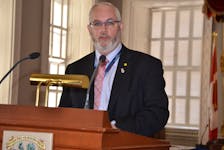
Angela Giles is the Atlantic regional organizer with the Council of Canadians and Wayne Lucas is president of the Canadian Union of Public Employees — Newfoundland and Labrador.

Comments

  • Username
    Ted
    - February 15, 2011 at 17:44:52

    CETA has been successfully kept out of media by those who do not want Canadians to be informed. Residents of Calgary West have heard nothing about CETA from their invisible MP, Rob Anders. On the other hand, MP Alex Atameneko, reprsenting BC Southern Interior, has made a point of keeping his constiuents informed by sending out a special edition newsletter last fall advocating agianst CETA and presenting 10 reasons for that. Whether an MP is pro or con, shouldn't it be their obligation to inform constituents on issues of public interest. The Calgary Chapter of The Council of Canadians has invited the public to a presentation and discussion of CETA in a meeting on February 15th. Their website is: www.calgarycocchapter.ca for those who are interested.

    Submit a Comment

  • Username
    Ken Kavanagh
    - February 9, 2011 at 10:57:32

    Colin, do you really understand what is being negotiated? Do you even know what is being negotiated? I would suggest that ordinary citizens do not and cannot know what is being negotiated because these talks are being negotiated in secret. And that is the fundamental issue here. Whether it is FTA, NAFTA, FTAA or WTO, all these so called trade agreements are initiated by business and political leaders without sanction or input from the citizenry. Who can forget the infamous MAI (Multilateral Agreement on Investment) that was being negotiated within the OECD in the mid nineties? It was rightfully scuttled when citizens in many countries, including Canada, learned about the secret negotiations and reacted. The Council of Canadians is not part of an industry, Colin and it is not fear-mongering. It is the largest CITIZEN-led organization in Canada and it is peeling back the secrecy and truth-telling! You might not want to listen to the truth Colin but surely you don't object to large numbers of citizens associating in a civil society organization to give voice to their beliefs, values and concerns.

    Submit a Comment

    • Username
      David
      - February 10, 2011 at 09:06:01

      If the council of canadians are against it then it must be a good idea.

  • Username
    FISH RESOURCE NEEDS ATTENTION
    - February 9, 2011 at 10:53:07

    Celeste L. who said ".... no accounting transparent to the people of Newfoundland and Labrador ..." I think you mean the people of Canada". No Celeste I meant what I said there is no accounting transparent to Newfoundland and Labrador, as for the rest of Canadians they don't give a damn as long as their economies are percolating and the Fish Resource was a Godsend to them because it was the enabler utilized by Ottawa to conduct International Trade. The fishery belongs to our province, we were willing to share it with all Canadians, but not give it up entirely. Ottawa has full control over the 'FISH QUOTAS' and that entails it has full control over the whole fishery. It has now according to some of the Fishery Activists fully embedded it in the "free trade agreement with the European Union". No other natural resource belonging to any other Canadian province is so embroiled and embedded in the free trade movement as is the Fish Resource that our province, Newfoundland and Labrador, brought into Canada in 1949. The European Unions' Scandinavian neighbours, Iceland and Norway kept their Fish Resource out of reach of the EU because they knew if they didn't, the EU Pact, if allowed, would have destroyed their fish resource in the same manner as they have destroyed the fish resources from West Africa, the Grand Banks of Newfoundland and others countries around the Globe. Why couldn't Ottawa have taken a lesson from Norway and Iceland? Norway and Iceland have not suffered from a lack of International Trade contracts despite the fact of their refusal to allow their fish resource entry into free trade stew. Does Ottawa have all of its senses disabled to have allowed such an unaccountable deed to have occurred with our fish resource? I`m shocked, and I hope you are too Celeste.

    Submit a Comment

  • Username
    FISH RESOURCE NEEDS ATTENTION
    - February 8, 2011 at 12:51:54

    THE ARTICLE STATES: "In a continuing effort to HAND OUR DEMOCRATIC RIGHTS over to MULTINATIONAL CORPORATION, Stephen Harper has engaged Canada and the provinces and territories in an overwhelming free trade experiment with the European Union. The deal, called a Comprehensive Economic and Trade Agreement (CETA), GOES WELL BEYOND what most of us would understand as trade. CETA is designed to limit the types of economic and social policies that Newfoundland and Labrador can put in place. With a sixth round of trade talks just concluded in Brussels, Belgium, it’s moving along too far and too fast for our liking". THIS IS THE VERY UNKNOWN PLACE that the Ottawa Government has committed our FISH RESOURCE to so as to conduct International Trade. It is a BLACK BOTTOMLESS HOLE with no accounting transparent to the people of Newfoundland and Labrador as to how and when, if ever, we will be able to get this priceless renewable resource back into our possession again! What were our Provincial and Federally elected Politicians thinking about to have allowed this HORRIBLE AND DASTARDLY deed to be committed?

    Submit a Comment

    • Username
      Celeste L.
      - February 8, 2011 at 13:34:24

      ".... no accounting transparent to the people of Newfoundland and Labrador ..." I think you mean the people of Canada.

  • Username
    Colin F
    - February 7, 2011 at 15:35:02

    The Provinces, through the Council of the Federation, asked for this negotiation. It is not some undemocratic exercise by Stephen Harper - such a boring and inaccurate talking point. Unions and the Council of Canadian protesting a trade deal - big surprise. Lets be honest - they love this stuff, as it allows them to generate public profile for their industry of being professional fear-mongerers. And the factual inaccuracies that they peddle! Where is their accountability? The CETA is not an attempt to privatize services and stop farmers from saving seed. I would like to believe that they are simply manipulating the facts, but the sad part is it is not certain that they understand what is being negotiated.

    Submit a Comment

  • Username
    Ken Kavanagh
    - February 7, 2011 at 15:28:31

    Way to go Angela and Wayne. This is a very important issue. Unfortunately, too many of our citizens don't pay attention to what looks to be a national matter. Trade agreements may be a national issue and one that is constitutionally, a federal responsibility, but these secretely negotiated deals to have critical impacts provincially and even locally. The Exxon and AbitibiBowaters NAFTA challenges are prime examples of how these trade deals and impact us in Newfoundland and Labrador. Maurice asks a great question regarding where our politicians stand on this issue. Let me raise another area where there will be an impact close to home. The Council of Canadians have just posted on their website that CETA will add $2.8 billion to Canadian drug plans with NL's share being $46.4 million. It's time for us all to speak up on CETA.

    Submit a Comment

  • Username
    Chantal
    - February 7, 2011 at 11:10:09

    No no! This can't be true. Surely the Tories would have trumpeted this wonderful deal rather than launching attack ads on the opposition. No doubt, as this is an opportunity that working Canadians will benefit from for generations, the government would spare no expense to inform us of this victory. They would have ensured that the public would be kept abreast of the work our negotiators are doing on a daily basis so that we see for ourselves Harper's commitment to carrying out the wishes of the public. The headlines would blare out this astonishing news, while the Super Bowl would be relegated to page 18. The Conservatives must stop being so modest and encourage us to take to the streets in celebration of our government – kinda like Cairo.

    Submit a Comment

  • Username
    Fish resource needs attention
    - February 7, 2011 at 11:08:51

    I beg Newfoundlanders and Labradorians to protest how our politicians have appointed our natural resources over the years without engaging any input in the negotiations of the sale of our resources by the electorate of our province. It is never too late to address this problem. To not to address it means that the status quo will be in place forever. Our resources, it appears, were negotiated away to the waiting arms of industries that needed them solely by our politicians. Nobody, I seem to talk to, remembers being asked what their opinion was, it appears that it was a process between the ruling politicians and the Industries which were craving our resources to be either smelted, refined, processed or manufactured by them. As a result our politicians got more from the sale of our resources than did the province. It appears to me the politicians were thinking the resources belonged solely to them. Yes fine resources like Fish, Minerals of all sorts, for example iron ore, nickel ore, etc, Hydroelectric Energy and Oil. All of which are directly and indirectly percolating fine economies in other parts of Canada and the World while the province of Newfoundland and Labrador is languishing with a 13.7 per cent Unemployment rate. The irony is we are an "have" province with such a high number of our electorate unemployed. Why would any politician sign away the fish quotas of our province to Ottawa, there is no more important resource in the whole world than fish, and then Ottawa, it appears, has signed it over to the European Union and other countries outside that pact for International Trade? And, yes every country in the World recognizes the value of a fish resource, since for sure they won't be able to exist on their minerals as a food source, there will be no sense in having monies coming in from the sale of our Oil and Ores if we cannot find a food source. We need an answer and we need our Premier and her politicians to become involved in the serious matter of our fish being treated the way it is by Ottawa without our province having any control. We need an answer and we need it now!

    Submit a Comment

    • Username
      W McLean
      - February 7, 2011 at 17:40:14

      Agnes, have you found any evidence yet of those fish-for-trade deals? Anything? Anything at all?

  • Username
    Maurice E. Adams
    - February 7, 2011 at 09:01:24

    Where is our Premier, our politicians (MPs and MHAs), and where do they stand on these issues? Should we have to wait for the Council of Canadians and CUPE to shed some light on this? The EU, along with other countries such as China and India, know all too well how important the availability and access to natural resources and food products will be in the future (even now) --- and it seems that our fish resources and our right to local processing will be bartered away by federal and provincial governments that are catering to corporate interests, not the best interests of our communities. To trade off our resources and rights for a "lowering of tariffs", is a joke. The EU, China, India, etc., NEED what Canada and NL has (natural resources and food). World populations are growing and these countries NEED what we have in order to maintain their economies and feed their people. Accordingly, tariffs will come down anyway. We are in the driver's seat and need not give away the shop ---- in fact, to do so, would be ensuring that the EU (not NL) will be the principal beneficiary of our natural resources. Maurice E. Adams, Paradise

    Submit a Comment

    • Username
      David
      - February 7, 2011 at 12:59:09

      Oh yeah, Council of Canadians and CUPE, there's two reliable sources of information.

Submit a Comment

Submit a Comment

This form is NOT used for emailing the article to a friend. Please use the "Send to a friend" link at the top of the page for that purpose.

The Telegram is not responsible for posted comments. Please be polite and confine your comments to the subject of the posted story. If you have an account, please sign on to it..

(we keep all emails private)
Agreement

We ask that users remain courteous. You may not post insulting, discriminatory or inappropriate content, which may be removed at our discretion. We are not responsible for user content and opinions. Use of this site as well as content submission & ownership are governed by our Conditions of Use and Privacy Policy.

Member organizations should be non-profit in nature, and promote legal activities. Any organization found promoting illegal activities or commercial products or services will be deleted from the site.

I agree with these conditions.

Advertising

Newsletter

Please enter your email to receive our free newsletter

Subscribe to news alerts
loading...

Tely Twitter

Advertising